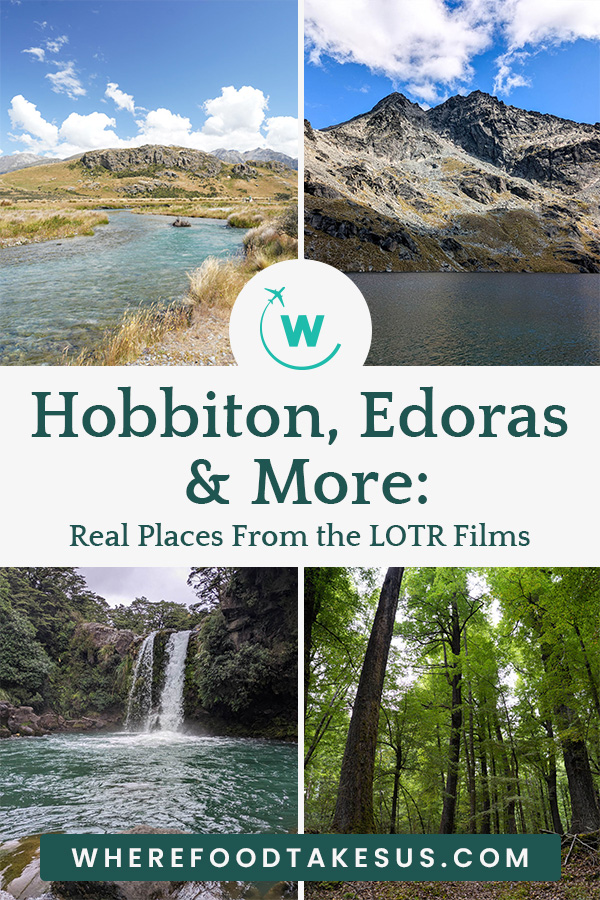
-
South Island Locations
- Edoras — Mount Sunday
- Ford of Bruinen — Arrow River, Arrowtown
- Gladden Fields — Near Arrowtown
- Dimrill Dale — Lake Alta near Queenstown
- Pelennor Fields — near Twizel
- Bob's Cove Area — Amon Hen & Ithilien
- Fellowship of the Ring Jackpot — Paradise, near Glenorchy
- Flight to the Ford — Near Tarras
- Argonath — Kawarau River
- Chetwood Forest — Takaka Hill
- North Island Locations
- Practical Tips for an LOTR-Focused Trip
- FAQ: Lord of the Rings Filming Locations in New Zealand
- Final Thoughts
Pristine glacial lakes, mountain ranges that seem to go on forever, and remote valleys that feel untouched by anything modern. It’s easy to see Middle-earth in almost every direction once you’ve stood in these places yourself, which is exactly why Peter Jackson filmed the trilogy here.
We wove a good number of Lord of the Rings filming locations into our 2-week New Zealand road trip, and this post is a companion to that one. If you want the full story of our trip, day by day, that’s where to go. This post is organized by location rather than day, so you can find exactly what you’re looking for whether you’re planning your own LOTR-focused trip or just curious where a specific scene was filmed.
A quick note before we dive in: these are the locations we personally visited during our two week stay. New Zealand has well over 150 confirmed filming locations across both islands, and plenty of guides out there will list all of them. We’d rather give you a shorter list you can trust, with real directions, real access notes, and real photos from actually standing there, rather than a comprehensive list of places we’ve only read about.
A good number of these locations came from a map a Reddit user put together and shared publicly, which we used heavily while planning this trip. We can’t verify who made it or how, but it held up well in practice: more than once, we crossed paths with official guided LOTR tours at the exact spots the map pointed us to, which gave us real confidence in it. Many of the pins also line up with locations already marked in Google Maps itself, so if you want to cross-reference before you go, we’d recommend checking both.
South Island Locations
The South Island is where we found the highest concentration of locations, and honestly, where the landscape itself does the most work. Here’s everything we visited, starting in Canterbury and working our way down through Otago.
Edoras — Mount Sunday
The scene: Mount Sunday stood in for Edoras, the capital of Rohan, in The Two Towers. The entire village, Meduseld and all, was built on top of this hill and dismantled after filming wrapped.
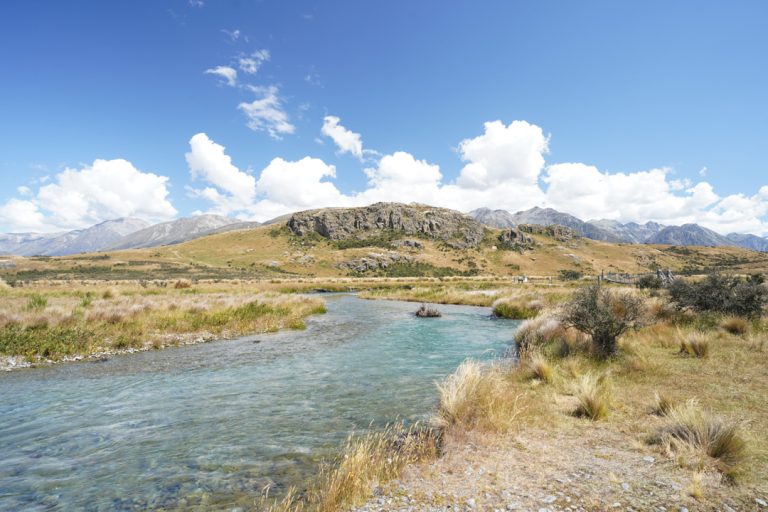

Mount Sunday Track, Ashburton Lakes 7771, New Zealand
What’s there: A small, flat-topped hill rising out of the Rangitata Valley, surrounded by the Southern Alps. The set is long gone, but the shape of the hill and the sweep of the valley around it are unmistakable the moment you see it. If you’ve watched the films, this is the location that needs the least imagination.
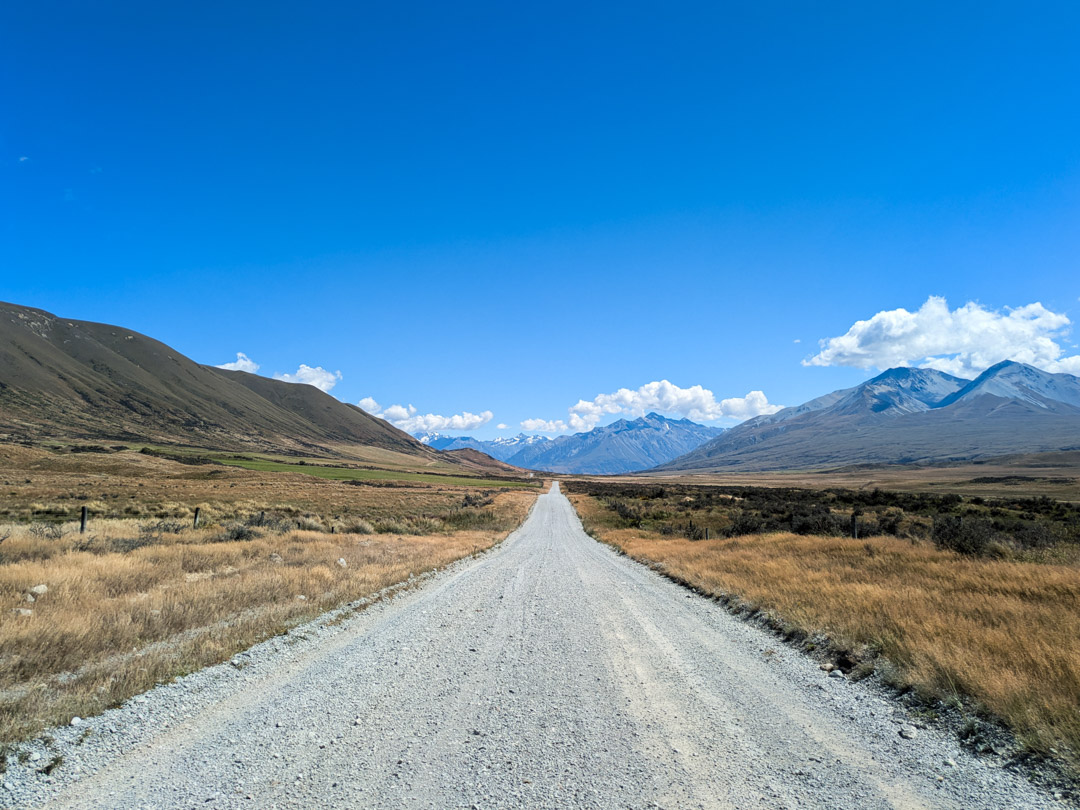
Our experience: This was one of the true highlights of our entire trip, LOTR fan or not. The drive out from Christchurch is a couple of hours and it ends on a gravel road through farmland, past sheep and cattle crossings, through wide-open valleys the whole way. You park at the base, cross a small footbridge, and walk up to the summit. It’s not a difficult climb, but the wind at the top can be intense, so hold onto your hat. We spent close to an hour up there just taking it in. Be sure to apply sunscreen.
If you go:
- Give yourself at least a half day for the round trip from Christchurch or Tekapo, including the drive, the hike, and time to actually sit with the view
- An AWD vehicle is helpful for the gravel road in, though not strictly required
- Bring layers, even in summer, the wind at the summit is no joke
- If you only visit one LOTR location on this entire trip (aside from Hobbiton), this is a great choice

Ford of Bruinen — Arrow River, Arrowtown
The scene: The Arrow River stood in for the Ford of Bruinen in The Fellowship of the Ring, the moment Arwen carries Frodo across the river on horseback and summons a flood to wash away the pursuing Black Riders.
What’s there: The Arrow River runs right along Arrowtown, a small historic gold-mining town just outside Queenstown. The stretch used in the film is recognizable and accessible from several points along the river walk.
Our experience: Arrowtown ended up being our favorite town in all of New Zealand, LOTR aside. We walked Tobins Track and Sawpit Gully Track along the river, cooled off by dipping our feet in the shallow water, and wandered the shaded path more than once during our stay. It didn’t feel like a filming-location pilgrimage so much as just a lovely spot to spend an afternoon.
If you go:
- Tobins Track and Sawpit Gully Track (this one will let you access the scene) run directly along the river and are flat, shaded, and easy
- Arrowtown is worth a trip on its own, not just a quick photo stop
- This is one of the few LOTR locations on this list you can reach on foot, right from town, no gravel roads or long drives required
Gladden Fields — Near Arrowtown
The scene: Gladden Fields is where Isildur was ambushed and killed at the end of the prologue in The Fellowship of the Ring, the moment the One Ring is lost in the river and later found by Déagol.
What’s there: This spot sits along the same trail system as the Ford of Bruinen, just a bit further along, right outside Arrowtown.
Our experience: We reached this one as part of the same walk that took us to the Ford of Bruinen as it’s on the same path. Like the Ford of Bruinen, it didn’t feel like a dedicated pilgrimage so much as a natural extension of an already wonderful riverside walk.
If you go:
- Pair this with your Ford of Bruinen visit, since they’re on the same trail and easy to combine into one outing
- No separate parking or access needed beyond what you’d already use for the Arrow River walk
Dimrill Dale — Lake Alta near Queenstown
The scene: Lake Alta briefly stood in for Dimrill Dale in The Fellowship of the Ring, the scene just after the Fellowship escapes the Mines of Moria.
What’s there: Lake Alta is a small alpine lake tucked up in The Remarkables mountain range, above Queenstown. It’s a genuine alpine environment: ice-cold water, exposed rock, and a setting that feels a world away from the town below.
Our experience: We visited on our drive into Queenstown, since the timing worked out well before check-in. The road up to the trailhead is gravel with some serious drop-offs and switchbacks, so we took it slow. The hike itself is short but steep and rocky. Once at the top, the water is striking, ice cold enough that we could only keep our legs in for a minute or two, but the setting alone is worth the climb. We had lunch perched on a rock at the edge of the lake.
One thing worth flagging: signs along the trail note the unique alpine flora growing there, plants that already have a hard enough time surviving the conditions without being trampled by hikers cutting corners. Stick to the marked trail.
If you go:
- The drive up is not for the faint of heart; slow down on the switchbacks and be mindful of oncoming traffic on the narrow gravel sections
- This is a short hike, but a steep and rocky one; wear good shoes
- Worth visiting regardless of LOTR interest, especially if you’re already staying in Queenstown
- If you’re visiting in winter, this area doubles as a ski field, so the appeal isn’t limited to summer

Pelennor Fields — near Twizel
The scene: The fields just outside Twizel were used for the Pelennor Fields battle sequence in The Return of the King, one of the largest and most pivotal battles in the entire trilogy.
What’s there: The actual filming site sits on private land, part of Ben Ohau Station, but a public DOC track runs right along the edge of it, close enough that the scene is instantly recognizable.
Our experience: It was a short, flat walk through a field but there were some muddy/swampy bits. We visited late afternoon but an early morning visit would probably be ideal. One thing we didn’t love: the sand flies were relentless on this walk. We hadn’t planned for them and paid for it.
If you go:
- Pack insect repellent before you go. This is one of the worst spots for sand flies we encountered on the entire trip
- Consider long sleeves even in warm weather, purely for the sand flies
- The track is flat and easy, suitable for almost anyone. Just be mindful there are some muddy patches
- Since the actual battle site is on private land, don’t attempt to cross onto Ben Ohau Station itself; the public track gives you plenty of the view without trespassing
Bob’s Cove Area — Amon Hen & Ithilien
The stretch of road between Queenstown and Glenorchy along Lake Wakatipu holds a cluster of Fellowship of the Ring filming spots. We didn’t walk between the two. There are a few separate pull-offs along the same road, so we drove between each rather than connecting them on foot.
Amon Hen
The scene: Amon Hen is the hill where the Fellowship splits after Boromir’s death, and where Merry and Pippin are captured by the Uruk-hai.
Our experience: We didn’t see the exact spot from the film, since it’s on private property and not reachable via the trail, but the surrounding area along the track gives you a real sense of the setting.
Ithilien
The scene: Ithilien is the broader forested area where the trilogy places Frodo, Sam, and Gollum during their journey toward Mordor.
Sam & Gollum’s Potato Scene
The scene: The specific spot for Sam and Gollum’s memorable exchange about potatoes, right before the trio spots the oliphaunts crossing in the distance.
Our experience: Ithilien was one of the better filming locations we visited. It was extremely easy to picture the scene and we highly recommend stopping here.
If you go:
- These are a few separate pull-offs along the same road, plan to drive between them rather than walk
- Pair this stretch with the drive further out to Glenorchy and Paradise, since it’s right along the same route
- Don’t expect a clearly signed Amon Hen spot; go in knowing it’s more about soaking in the surroundings than pinpointing an exact frame from the movie
Fellowship of the Ring Jackpot — Paradise, near Glenorchy
The Paradise valley, just past Glenorchy, was used for several Fellowship of the Ring scenes. Like Bob’s Cove, these are a handful of distinct spots spread across the valley rather than one single site, so we drove between them rather than covering it all on foot.
Isengard — Scott Creek
The scene: This location formed the basis for the digitized background of Isengard, Saruman’s stronghold.
Amon Hen — Paradise
The scene: Part of the wider Amon Hen sequence, including the fighting that leads to Merry and Pippin’s capture.
Dan’s Paddock — Gandalf’s Approach to Isengard
The scene: This is where Gandalf rode up to Isengard. The peak of Mount Earnslaw nearby was used as part of the Misty Mountains backdrop.
Lothlórien, the Edge
The scene: This area was used to show the Fellowship entering Lothlórien, the elven forest realm ruled by Galadriel and Celeborn.
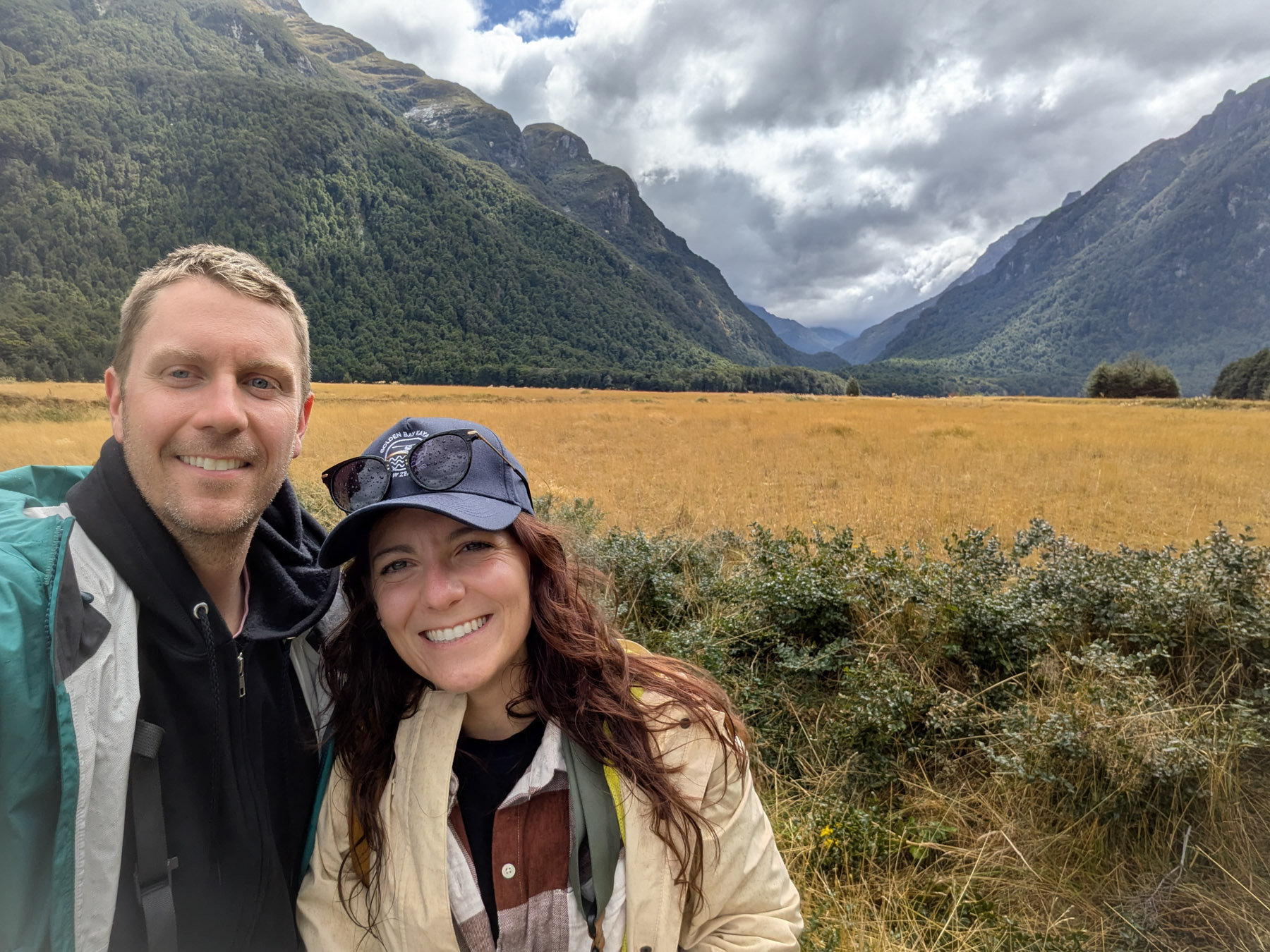
Our experience: Standing in the valley just past Gandalf’s approach and Lothlórien was one of the most memorable LOTR moments of the entire trip. One of the rare spots where the location does all the work without needing any context. The drive in is on a rough gravel road with a couple of shallow creek and rock crossings, nothing extreme, but a proper vehicle with some clearance made it easier. Sheep were everywhere along the way, and we had to stop more than once to let a herd cross. And snap some photos, of course.
The forest that served as the scene where Boromir died defending the Hobbits was so identical to the film, you can picture it perfectly while standing under the trees. We passed a LOTR tour group on the trail, a good sign we were in the right spot.
If you go:
- A vehicle with real clearance is worth having for the drive in; a low sedan might struggle
- Go slow, sheep and other stock cross the road regularly
- These four spots are spread across the valley, plan to drive between them rather than treating it as one stop
- Pair this with lunch or takeaway from Glenorchy beforehand, and the Glenorchy lagoon walk afterward if you have an extra hour to kill
Flight to the Ford — Near Tarras
The scene: The wider countryside near Tarras was used for the surroundings of the Flight to the Ford sequence in The Fellowship of the Ring, the ride where Arwen carries Frodo toward Rivendell.
What’s there: Open farmland with scattered clumps of trees, on private land. The actual river-crossing shot from the film was filmed elsewhere; what’s near Tarras is the surrounding countryside used for the sequence leading up to the crossing.
Our experience: We didn’t get close-up access since this was private land. What we saw was from the roadside, a field with clumps of trees that matched the general surroundings from that part of the film. It’s a “you’ll recognize the landscape, not a single iconic shot” kind of stop.
If you go:
- Don’t expect to walk right up to a recognizable movie shot; this is a roadside, from-a-distance kind of location
- Respect the private land, there’s no public access to get closer
- Worth a quick stop if you’re already driving through the area. We don’t think it’s worth a special detour on its own
Argonath — Kawarau River
The scene: The Argonath, the two massive stone kings guarding the entrance to Gondor, appear as the Fellowship paddles past them in The Fellowship of the Ring. The statues themselves were entirely CGI, added in post-production.
Our experience: Since the Argonath statues were never physically there, this isn’t a “spot the set piece” kind of location, it’s a “recognize the river” one. That said, this stretch of the Kawarau is gorgeous on its own, CGI history aside. We took a detour to see it after we biked the Gibbston Valley Wine Trail.
If you go:
- Set expectations correctly: there’s nothing physical to see beyond a beautiful river; the statues exist only in the film
- Worth combining with a winery stop in the area rather than visiting as a dedicated LOTR pilgrimage
- A good one to mention to any LOTR-fan travel companions, since it’s an easy, low-effort stop to fold into a day that’s mostly about something else (wine, in our case)
- It’s on the way to another winery that’s by appointment only but the road leading up to it is narrow with a steep drop off.
Chetwood Forest — Takaka Hill
The scene: Chetwood Forest is where the hobbits hide from a Black Rider just after fleeing the Shire in The Fellowship of the Ring, not long after leaving Hobbiton.
What’s there: Takaka Hill is the winding, forested hill you drive over to reach Golden Bay from Nelson. The specific filming location is a section of forest near the top of the hill.
Our experience: We drove over Takaka Hill twice, once on the way in and once on the way out, and had no idea we’d crossed a filming location until after the fact. We just drove straight through on our way to Golden Bay, our first stop on our New Zealand adventure. If we’d known, we would have pulled over for a short walk into the trees near the top of the hill.
If you go: Since we didn’t stop ourselves, we can’t give you exact turnoff directions or a precise parking spot. What we can tell you is that it’s somewhere along the section of road near the summit of Takaka Hill, and if you’re a fan making this drive anyway, it’s worth building in a few extra minutes to pull over and look around rather than assuming you’ll recognize it in the moment, since we didn’t.
North Island Locations
We only had a few days on the North Island, so this list is shorter, but Hobbiton alone makes the trip worth it. Here’s what we saw.
Hobbiton — Matamata
The scene: Hobbiton is the Shire itself, the hobbit village where the trilogy opens and where Bilbo and Frodo’s stories begin. It’s the single most recognizable and most visited filming location in all of New Zealand.
What’s there: A fully built, permanent set: hobbit holes dug into rolling green hills, the Green Dragon Inn, the mill, the gardens, the bridges, all of it. Like most locations on this list, the original set was mostly dismantled after the LOTR trilogy wrapped. But when it came time to film The Hobbit years later, the decision was made to rebuild it properly, this time as a permanent structure built to last, and it has remained standing ever since as a proper tourist attraction.
Our experience: We did the breakfast tour, the first tour slot of the day, and it made a real difference. We walked into the Shire before any other groups arrived, with a plentiful breakfast included as part of the experience. The tour walks you through how Peter Jackson found the property and how the set was built, then rebuilt, with a ton of small behind-the-scenes details that are interesting even if you’re not a die-hard fan. It wraps up with a beer at the Green Dragon (yes, for breakfast) and a proper feast inside the mill.
If you go:
- Book early, like way early. The breakfast tour sold out five months ahead of our trip, and the dinner tour was already gone by the time we tried. You can always get on their waitlist for the meal tours but you should go ahead and book a standard tour in the meantime
- If you can’t get breakfast or dinner, lunch and standard tours run throughout the day and are still worth doing, just expect heavier crowds
- Give yourself the full morning if you book breakfast; the tour plus feast takes a while, in the best way
- This is the one location on this list that requires a paid, guided tour; there’s no free or public-access version. It’s one of the best tours in the world, if you ask us


Gollum’s Pool — Tawhai Falls
The scene: Tawhai Falls is where Gollum is captured by Faramir’s men in The Two Towers, right after he’s caught fishing in the Forbidden Pool below the falls.
What’s there: A short, easy walk through native bush leads to the falls themselves: clear water tumbling into a quiet pool, surrounded by lush green moss.
Our experience: This was our first stop once we reached Tongariro National Park, and it’s an easy one to fold into a day that’s mostly about the volcanic landscape further up the road. You can climb out onto the rocks near the pool, just exercise caution since they can be quite slippery.
If you go:
- The walk is short and easy, suitable for almost anyone
- Combine this with a visit further up toward Mount Ruapehu, since they’re both in the same part of the park
- Watch your footing on the rocks near the pool if you step out for a closer look or a photo
Mordor — Mount Ruapehu
The scene: The volcanic terrain around Mount Ruapehu was used for the bleak, ash-covered landscapes of Mordor throughout the trilogy. Nearby Mount Ngauruhoe served as the visual basis for Mount Doom itself.
What’s there: A road climbs up through genuinely otherworldly volcanic terrain: dark rock, sparse vegetation, and a landscape that didn’t look like anywhere else we had been.
Our experience: We drove up expecting sweeping views of the surrounding peaks, but the weather had other plans. A thick fog rolled in as we climbed, visibility dropped to almost nothing, and a steady rain started falling. We couldn’t see the mountain at all. Strangely, that ended up feeling right for the location: driving through that terrain in heavy fog was more haunting and atmospheric than clear skies would have been. On a clear day, you’d get much better views of the surrounding peaks, including Ngauruhoe itself, but we’re glad we still did the drive despite the weather.
If you go:
- Check the forecast before you go; fog can completely close out the views, though the drive is worth doing either way
- Combine this with Tawhai Falls, since both are in the same part of Tongariro National Park
- Note that climbing Mount Ngauruhoe itself is discouraged out of respect for its significance to local Māori; the road and lower terrain are where you’ll experience most of this location

Practical Tips for an LOTR-Focused Trip
A few things we’d pass on to anyone building a trip around these locations specifically:
- Rent a vehicle with real clearance. Several of these locations, Mount Sunday, Paradise, and Lake Alta especially, involve gravel roads, creek crossings, or steep switchbacks. A hybrid AWD SUV struck the right balance for us between capability and manageability on narrow roads. We go into more detail on choosing a rental in our driving in New Zealand post.
- Book Hobbiton early, especially the breakfast or dinner tour. This is the one location on this list that requires advance planning several months out
- Pack insect repellent. Sand flies were a real problem at Pelennor Fields specifically, and it’s worth having on hand generally throughout the South Island.
- Respect private land. A few of these locations, like Pelennor Fields and the Tarras countryside, sit on private property. Public tracks get you close enough; please do not trespass.
- Don’t try to hit every location in one day. These are spread across two islands and multiple regions. We wove ours into a broader 2-week itinerary rather than treating it as a dedicated LOTR-only trip, and that pacing felt right. Our full New Zealand road trip itinerary shows how we split things up region by region.
- Some locations reward fans more than others. Mount Sunday and Hobbiton need zero imagination. Others, like Amon Hen or the Tarras countryside, are more about recognizing general surroundings than spotting an exact frame from the films. Go in with the right expectations for each.
FAQ: Lord of the Rings Filming Locations in New Zealand
No, not for most of them. Hobbiton is the one clear exception, since it’s a paid, guided-only attraction. Everything else on this list, Mount Sunday, Lake Alta, Paradise, Bob’s Cove, Tawhai Falls, and Mount Ruapehu, is accessible on your own with a rental car and a bit of planning.
The Arrow River in Arrowtown and Tawhai Falls in Tongariro National Park are the two easiest on this list: both are short, flat walks with no gravel roads or long drives required to reach the trailhead.
Not strictly required everywhere, but genuinely helpful. Mount Sunday, Lake Alta, and the drive into Paradise all involve gravel roads, and Paradise specifically has a few shallow creek and rock crossings.
No. Some, like the fields near Twizel used for Pelennor Fields, sit partly on private land, with a public track running alongside rather than through the actual filming site. Others, like the countryside near Tarras, are entirely private, with only a roadside view available.
As far as what we visited, yes. Every other location on this list had its set fully dismantled after filming, so what remains today is the natural landscape itself, not any built structures.
Final Thoughts
Whether you’re a die-hard Tolkien fan or you’ve just always wondered where those landscapes actually are, New Zealand delivers on all of it. What struck us most wasn’t any single location, it was how often the film connection felt secondary to how genuinely beautiful these places are on their own. Mount Sunday, Paradise, Lake Alta: we’d recommend all of them to a traveler who’s never seen the movies just as readily as we would to a lifelong fan.
We wove these locations into a broader 2-week trip across both islands rather than building a dedicated LOTR-only itinerary, and that pacing worked well for us. If you want the full day-by-day story of that trip, food, hikes, farm stays and all, head over to our complete New Zealand itinerary. And if you’re still working out the logistics of your own trip, rental cars, driving, when to go, we cover all of that in our New Zealand road trip planning guide.
Got a favorite LOTR location we should add to our list for next time? Let us know in the comments.
Happy travels! May your fellowship stay intact.