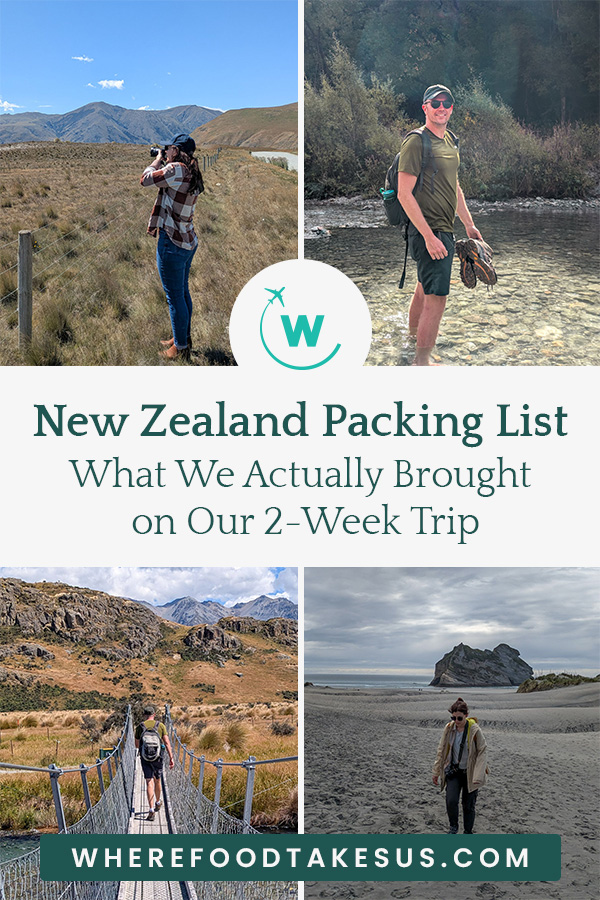
- Clothing & Layers: Dress for Four Seasons in One Day
- Footwear: One Pair for the Trail, One for Everything Else
- Sun & Weather Protection: Your Skin Will Thank You Later
- Hiking Gear: Just the Day Hike Essentials
- Sawyer Squeeze Water Filter
- Electronics & Camera Gear: What We Shot New Zealand With
- Frequently Asked Questions
- Final Thoughts
Some of the links in this post are affiliate links. This means if you click on the link and purchase the item, we will receive an affiliate commission (thanks for that!) at no extra cost to you.
Packing for New Zealand sounds straightforward until you realize you might hike through alpine terrain in the morning, eat dinner in a warm lakeside town, and stargaze somewhere where the temperature drops fast. It’s a country that’ll make you earn every view, and your gear matters.
This is what we actually packed for our two week summer road trip, which took place mostly on the South Island, with a few days in the North. Some of it we’d pack again without a second thought. Some of it we’d swap out. And there’s at least one thing we wish we’d discovered before the trip instead of after (looking at you, sun hoodies). We’ve linked everything we can to Amazon to make it easier for you to grab before you go.
We visited in February. Packing for a New Zealand winter or shoulder season trip? Some of the clothing suggestions below, particularly the layers, will apply. You’ll want to lean into them harder.
Clothing & Layers: Dress for Four Seasons in One Day
New Zealand summer is deceptive. Days on the South Island can be quite warm, especially around Queenstown and the Mackenzie Country. But the weather shifts fast at altitude, and evenings cool down quickly, sometimes to single digits Celsius even in February. You want to be able to add and shed layers throughout the day.
Rain Jacket (Non-Negotiable)
Don’t even consider skipping this one. New Zealand weather, especially around Fiordland and the West Coast, can turn without much warning, and if you’re touring Milford or Doubtful Sound, you’re almost certainly getting wet. We each had a waterproof, packable shell and were thankful for it every time.
Darah wore the Lands’ End Squall Packable Waterproof Raincoat, which packs down small and keeps you dry without feeling stiff or bulky. Garrett wore the REI Co-op Rainier Rain Jacket, which is a solid mid-range option worth checking out.

Flannels + Short-Sleeve Base Layer
This was our go-to layering system for most of the trip: a short-sleeve shirt underneath a flannel or similar long-sleeve overshirt, which gave us the flexibility to adjust throughout the day without hauling a bulky jacket everywhere. You’d be surprised how far that combination carries you on a South Island summer day.

Quick-Dry Hiking Shirts, Pants, and Shorts
Whatever brand you prefer, the key is quick-dry fabric. You’ll be moving a lot, sweating on hikes, and you don’t want to be stuck in cotton halfway up a trail. We stuck mostly to REI brand for the price-to-durability ratio.
Sun Hoodies
We did not have these on our trip and it’s our biggest packing regret. A lightweight, UPF-rated long-sleeve sun hoodie is the kind of thing you don’t know you need until you’re standing on an exposed hillside with no shade and New Zealand’s strong UV bearing down on you. We’ve since discovered REI’s version and would pack one (or two) next time without hesitation. Worth grabbing before you go.
Hiking Socks
Do not pack your regular everyday socks for a hiking trip. We wore Darn Tough merino wool hiking socks, women’s and men’s, the entire trip without a single blister or hot spot. Merino wool regulates temperature better than you’d expect, so they work in warmer conditions too. They come at a premium, but your feet will notice the difference on a long trail day.
How Much to Pack?
We didn’t bring clothes for every day of our trip because we purposefully booked an Airbnb with a washing machine. So we knew we’d be doing laundry around the midpoint of our stay. This meant we didn’t have to pack as much, which is always a plus!
We brought our detergent sheets with us but hosts often have their own supply. The detergent sheets are nice if you don’t have access to a washing machine as you can simply wash your clothes in the sink or tub.
Footwear: One Pair for the Trail, One for Everything Else
You don’t need a closet’s worth of shoes for New Zealand, but the right couple of pairs cover almost everything.
Hiking Boots
For day hikes, you want something waterproof and supportive. We both wore the Merrell Moab 3 Mid Waterproof, available in women’s and men’s, and they handled everything we threw at them: Hooker Valley, the terrain around Glenorchy, the rocky ascent to Lake Altas, and stream crossings. The mid-cut ankle support earns its keep on uneven ground.
These boots were great because it wasn’t necessary to break them in. The material is closer to a sneaker than a traditional hiking boot, so you get flexibility right out of the box. That said, you may still want to wear them around the house, on errands, or on short walks before your trip just to make sure they’re comfortable for you. Don’t show up to the trailhead in brand new boots.

Everyday Comfort Shoes
You’re not hiking every hour of every day. There are towns to wander, farm stay porches to relax on, and dinners to get to. An everyday shoe, like the Dr. Scholl’s Laurel, comfortable enough for a full day of casual walking and a nice night out without needing to think about it.
A Note on Sandals
A packable pair of sandals or slip-ons is worth throwing in if you have room. After a long day on the trail, your feet want out of those boots. If you plan on spending some time at the beach or by the lake, sandals are a good call. We wouldn’t prioritize it over everything else on this list, but if you’ve got space, you’ll use them.
Sun & Weather Protection: Your Skin Will Thank You Later
This category isn’t optional in New Zealand. Be sure to protect your skin!
Sunscreen
The UV index is a big factor in New Zealand thanks to a thinner ozone and clean air. With that in mind, be sure to pack plenty of sunscreen. For your body, if you’re spending any time near the water, and you hopefully are, check your sunscreen label before you pack it. You want something free of Octinoxate and Oxybenzone. Grab whatever SPF and brand you prefer, just make sure those two ingredients aren’t on the list.
As a bonus for your face, we used the Cetaphil Sheer Mineral Sunscreen SPF 50. It’s lightweight, not sticky, and no white cast. It’s good for sensitive skin, which is a bonus when you’re spending long days outside.
Bug Repellent
Pack it before you go, or you’ll be buying it after landing. We were introduced to the local sand flies and realized immediately we needed some relief from those biting nuisances. We wrote about sand flies in our New Zealand planning post. They are not to be underestimated, especially around Fiordland. We picked up a citronella-based oil repellent once we were on the ground and it worked well for us. Something similar to this essential oil blend is worth tucking in your bag before you leave. Better to have it on day one than after the sandflies have already introduced themselves. Believe us, the itching can last for days.
Hats and Sunglasses
Bring them. Non-negotiable. Darah forgot a hat and ended up buying a souvenir hat in New Zealand, which worked out well, but we’d have rather put that money toward something else. Bring one with you and if you end up wanting the souvenir hat anyway, go for it!
Sunglasses are just as important with UV this strong, especially on longer drives and exposed hikes where there’s little shade. A polarized pair makes a real difference on bright lake and mountain days.

Hiking Gear: Just the Day Hike Essentials
We kept this list lean since we stuck mostly to day hikes rather than multi-day treks.
Day Pack
We’ve carried a North Face Recon Backpack for years and it made the trip to New Zealand too. It’s a solid all-day pack: comfortable straps, two water bottle pockets, a laptop sleeve, and enough room for layers, snacks, and camera gear without turning into a burden. It’s an older version, but the Recon has been a reliable line for a long time.
For New Zealand, we also used a North Face pack made from recycled materials that’s no longer available, but the Women’s Recon is a comparable option. The only issue was the bottle holders run a little narrow.

Sawyer Squeeze Water Filter
This one is a peace-of-mind item more than a daily necessity. We mentioned in our planning post that you should always carry more water than you think you’ll need and we mean it. For longer trail days or remote sections where you’re not sure what’s available, the Sawyer Squeeze is compact, lightweight, and easy to use. It takes up almost no room in your pack and you’ll feel better having it. New Zealand’s backcountry water is generally clean, but having the option to filter from a stream removes one variable from the equation.
Electronics & Camera Gear: What We Shot New Zealand With
New Zealand is one of the most photogenic countries we’ve visited. Here’s what we brought to capture it.
Sony a7 III + 20mm f/1.8 G Lens
We brought the Sony a7 III as our primary camera and it was the right call for New Zealand. The landscape there rewards a full-frame sensor. We paired it most often with the Sony FE 20mm f/1.8 G, an ultra-wide prime that handled everything from sweeping mountain views to the Church of the Good Shepherd at night. The f/1.8 aperture made it our go-to for astrophotography around Lake Tekapo, where the skies are certified dark and the stars put on a show.

If you’re into landscape and night photography, this lens in particular is worth the investment.
Tip: If you’re just now getting into photography, or even if you’re a seasoned photographer, second-hand cameras and lenses are great if you don’t want to break the bank. We bought both our starter camera, the Nikon D3400, and our Sony a7 III second-hand and we saved a lot of money on both by doing so. MPB is a great site for finding reliable, second-hand gear.
Joby GorillaPod Compact Tripod Kit
For astrophotography or long exposure shots, a stable base is non-negotiable, and we didn’t want to haul a full-size tripod across the country. The Joby GorillaPod Compact Tripod Kit was our answer: lightweight, easy to pack, and quick to set up wherever we ended up shooting stars, whether that was a proper tripod-friendly surface or a rock at Lake Tekapo. It’s rated for mirrorless cameras up to 2.2 lbs, which comfortably covers the a7 III.
Google Pixel (Our Everyday Camera)
We also leaned heavily on our Google Pixels for everyday shots and honestly, they held their own. We used the Pixel 8a, which has astrophotography and long exposure capability built in. While it’s nothing compared to the camera for astro pics, the landscape shots on the go were impressive for a phone.
The camera keeps getting better with each generation. If you’re looking for a budget-friendly option that still takes great travel photos, any of the Pixel “a” models are worth considering.
Universal Travel Adapter
New Zealand uses Type I outlets, which are different from US plugs. A universal travel adapter is a must (for any international trip!). Don’t assume your accommodation will have adapters available and come prepared
Google Fi
For connectivity, we used Google Fi as our international carrier and it worked well throughout the trip, including in more remote parts of the South Island. Google Fi is worth looking into if you’re with a carrier that doesn’t have a straightforward international plan.
Coverage and pricing were both reasonable for a two-week trip. Since we’re not locked into a contract, we could upgrade to the unlimited international plan for our trip and easily downgrade to a more affordable option once we returned.
It might be more affordable to go with a local plan or eSim (compare against your own plan) but we found the convenience of easily upgrading to the international plan and keeping our numbers to be worth the slight price difference.
Tip: Download Maps no matter what. Even if you go with a local New Zealand carrier or another eSim company, downloading maps before your trip is a must. You’ll likely encounter dead zones and you’ll want your maps backed up so you can still navigate around. If you haven’t driven in New Zealand before, we put together some driving tips for first-timers.
Frequently Asked Questions
Focus on layers rather than heavy clothing. A packable rain jacket, quick-dry shirts and pants, a fleece or flannel for evenings or early mornings, and solid hiking socks will cover most situations. New Zealand summer days can be warm but evenings at altitude cool off quickly, even in February.
Yes. Waterproof boots like the Merrell Moab 3 Mid will handle wet trail sections, stream crossings, and the unpredictable weather that comes with mountain terrain.
Very. New Zealand has one of the highest UV indexes in the world due to its location and the thinner ozone layer in the Southern Hemisphere. Wear SPF daily, even when it’s cloudy.
Not for most day hikes, which typically have water stations or are short enough to carry what you need. But a compact filter like the Sawyer Squeeze is a lightweight peace-of-mind addition for longer or more remote trails.
Any recent Google Pixel “a” model is a strong option for the price. Garrett’s Pixel 8a handled standard shots and astrophotography. If you want to go further with landscape and night photography, the Sony a7 III with a wide prime lens is in a different league entirely but the Pixel or any newer smartphone nowadays will surprise you.
We used Google Fi and had solid coverage throughout the trip, including remote South Island locations. It’s worth comparing with your current carrier’s international add-ons, but Fi was seamless for us. New Zealand carriers also offer phone plans for visitors.
Final Thoughts
New Zealand rewards good gear. You don’t need to overpack or buy the fanciest version of everything, but a solid rain jacket, broken-in boots (or in our case, boots that didn’t need breaking in), sun protection, and a way to capture the views will make the difference between a trip that feels effortless and one where you’re constantly adjusting on the fly. Pack for a day that might throw all four seasons at you, and you’ll be ready for whatever New Zealand actually gives you.
Here’s a clean, print-friendly version of the full checklist. No links, just the essentials. Print it, check it off, and go.
New Zealand Packing List
Clothing & Layers
Footwear
Sun & Weather Protection
Hiking Gear
Electronics & Camera Gear
Documents & Essentials